
ENCIRCLED MINDS, FRACTURED BORDERS: INDIA’S EMERGING THREATS AND THE SILENT WAR OF INFORMATION.
- S.S.TEJASKUMAR

- May 19, 2025
- 14 min read

1971 में, भारत ने उस देश को आज़ाद कराने के लिए निर्णायक रूप से हस्तक्षेप किया, जो अब बांग्लादेश है, जो पश्चिमी पाकिस्तान द्वारा पूर्वी पाकिस्तान के क्रूर दमन से पैदा हुआ था। यह एक मानवीय, सैन्य और राजनीतिक जुआ था, जो कम से कम उस समय तो कामयाब रहा। लेकिन ऐसा लगता है कि इतिहास में कृतज्ञता को शिकायत में बदलने की एक अनोखी क्षमता है, और भूराजनीति कभी भी आदर्शवाद को पुरस्कृत नहीं करती है। जिन लोगों के लिए भारत ने कभी लड़ाई लड़ी थी, आज उनके राजनीतिक और वैचारिक नेतृत्व के कुछ हिस्से ऐसी महत्वाकांक्षाओं को पालते हुए दिखाई देते हैं, जो भारतीय संप्रभुता के विचार को ही ख़तरे में डाल रही हैं - ख़ास तौर पर पूर्वोत्तर, पश्चिम बंगाल, ओडिशा और सीमावर्ती क्षेत्रों में।
1971 के बाद बांग्लादेशी शरणार्थियों, ख़ास तौर पर मुसलमानों, का भारत में आना मानवीय ज़रूरत के बहाने बर्दाश्त किया गया। समय के साथ, यह कई भारतीय दलों के लिए एक राजनीतिक अवसर में बदल गया, जिनकी नज़र राष्ट्रीय हितों के बजाय वोट बैंक पर थी। जो एक अस्थायी आश्रय होना चाहिए था, वह स्थायी बस्ती बन गया, और जो एक सुरक्षा चेतावनी होनी चाहिए थी, उसे समावेशी नारे लगाने के अवसर की तरह माना गया।
धर्मनिरपेक्षता और बहुलवाद की आड़ में स्थानीय आबादी, रक्षा विश्लेषकों और सीमा सुरक्षा अधिकारियों की वास्तविक चेतावनियों को ज़ेनोफ़ोबिक व्यामोह के रूप में खारिज कर दिया गया। आज जो सामने आया है वह केवल जनसांख्यिकीय असंतुलन नहीं है, बल्कि राष्ट्रीय सुरक्षा के लिए एक स्पष्ट, सुनियोजित खतरा है। असम, बंगाल, ओडिशा के कुछ हिस्सों और यहाँ तक कि दिल्ली के शहरों और कस्बों में अवैध बांग्लादेशी बसने वालों की संख्या में तेज़ी से वृद्धि हुई है।
पिछले कुछ वर्षों में, कुछ लोगों ने जाली पहचान पत्र प्राप्त किए हैं, जिससे वे वोट देने और कल्याणकारी योजनाओं का लाभ उठाने में सक्षम हो गए हैं, जिससे उनकी उपस्थिति और भी मज़बूत हो गई है। कई क्षेत्रों में, मूल हिंदू अपनी ही भूमि में शरणार्थी बन गए हैं, क्योंकि ये बस्तियाँ वोट-समृद्ध, राजनीतिक रूप से अछूत क्षेत्रों में बदल गई हैं। इन बस्तियों के बारे में राजनीतिक चुप्पी - या इससे भी बदतर, सक्रिय संरक्षण - एक खतरनाक अदूरदर्शिता को दर्शाता है। अब, जब ढाका में तुर्की समर्थित इस्लामी संगठनों द्वारा “ग्रेटर बांग्लादेश” के मानचित्र को बढ़ावा देने की रिपोर्टें सामने आ रही हैं, जिसमें भारतीय राज्य शामिल हैं, और चीनी अधिकारियों द्वारा सिलीगुड़ी कॉरिडोर के पास बांग्लादेश के रणनीतिक लालमोनिरहाट एयरबेस का दौरा करने के साथ, पैटर्न स्पष्ट हो रहे हैं। बांग्लादेश, जो कभी युद्ध से पीड़ित था, अब वैश्विक खिलाड़ियों-तुर्की, चीन और शायद पाकिस्तान द्वारा भारत के पूर्वी हिस्से को अस्थिर करने के लिए एक नरम मोर्चे के रूप में तैयार किया जा रहा है। तथाकथित सल्तनत-ए-बांग्ला समूह केवल एक भ्रामक मानचित्रण नहीं कर रहा है; यह सीमा पार लंबे समय से पोषित स्लीपर समुदायों द्वारा क्षेत्रीय दावों के लिए वैचारिक आधार तैयार कर रहा है।

भारत को अपनी लंबी रणनीतिक नींद से जागना होगा। नेहरूवादी आदर्शवाद और उत्तर-औपनिवेशिक अपराध की विरासत 21वीं सदी में दुनिया के सबसे बड़े लोकतंत्र की सुरक्षा नीति को निर्धारित नहीं कर सकती। उन लोगों के प्रति कोई नैतिक ऋण नहीं है जो अब हमारे विखंडन की गुप्त योजना बना रहे हैं।
राजनीतिक शुद्धता के लिए राष्ट्रीय पहचान को कमजोर नहीं किया जा सकता।
अब समय आ गया है कि भारत 1971 की कहानी पर फिर से विचार करे-पुरानी यादों के साथ नहीं, बल्कि कठोर यथार्थवाद के साथ। सीमाओं का कुछ मतलब होना चाहिए। नागरिकता की रक्षा की जानी चाहिए। और सबसे बढ़कर, राष्ट्रीय सुरक्षा को अब वैचारिक पाखंड की वेदी पर बलिदान नहीं किया जाना चाहिए।
उपमहाद्वीपीय शक्ति की गतिशीलता एक बार फिर बदल रही है, लेकिन इस बार टैंकों की गड़गड़ाहट या लड़ाकू विमानों की गर्जना के साथ नहीं - बल्कि डिजिटल मानचित्रों, धार्मिक प्रतीकों, वैचारिक पुनरुत्थानवाद और विध्वंसक गठबंधनों की मूक हरकतों के साथ। भारत एक खतरनाक चौराहे पर खड़ा है, न केवल प्रत्यक्ष गतिज खतरों के कारण बल्कि हाइब्रिड युद्ध के बढ़ते जाल के कारण, जहां मनोवैज्ञानिक संचालन, नागरिक बुनियादी ढांचे, सैन्य रसद और धार्मिक कट्टरपंथ के बीच की सीमाएं धुंधली हो गई हैं। इस संबंध में सबसे खतरनाक घटनाक्रमों में से एक बांग्लादेश में चीन का बढ़ता पदचिह्न है, विशेष रूप से द्वितीय विश्व युद्ध के समय के परित्यक्त लालमोनिरहाट एयरबेस के आसपास।

भारतीय सीमा से बस एक पत्थर फेंकने की दूरी पर - 12 से 15 किलोमीटर - और अल्ट्रा-रणनीतिक सिलीगुड़ी कॉरिडोर से मात्र 135 किलोमीटर दूर, साइट निरीक्षण, सलाहकार यात्राओं और गुप्त इंजीनियरिंग सर्वेक्षणों के माध्यम से चीन की सूक्ष्म भागीदारी निर्दोष नहीं है। यह एक ऐतिहासिक रंगमंच को पुनर्जीवित करता है जो अब आधुनिक भू-राजनीति से भरा हुआ है। सिलीगुड़ी कॉरिडोर या 'चिकन नेक' भारत की सबसे बड़ी कमजोरी बनाया जा रहा हैं - यह पूर्वोत्तर राज्यों को भारत के बाकी हिस्सों से जोड़ता है। यहां कोई भी व्यवधान, चाहे वह गैर-सैन्य ही क्यों न हो, जैसे इलेक्ट्रॉनिक युद्ध, साइबर ब्लैकआउट या स्थानीय प्रॉक्सी के माध्यम से मनोवैज्ञानिक व्यवधान, भारतीय मुख्य भूमि के साथ क्षेत्र के एकीकरण को पंगु बना सकता है। यहां केवल चीन द्वारा किसी सहयोगी राष्ट्र में सैन्य गहराई स्थापित करने की कहानी नहीं है, बल्कि बीजिंग की लंबी अवधि की घेराबंदी रणनीति है - भारत के चारों ओर न केवल बंदरगाहों के साथ बल्कि एयरबेस, सैटेलाइट ग्राउंड स्टेशन और वैचारिक कोशिकाओं के साथ मोती पिरोना, जो सभी पारंपरिक पहचान के रडार के नीचे हैं।
फिर भी चीन भारत के पड़ोसियों के वैचारिक क्षेत्र में निवेश करने वाला एकमात्र बाहरी अभिनेता नहीं है। राष्ट्रपति एर्दोआन की नव-ओटोमन आकांक्षाओं के तहत तुर्की तेजी से दक्षिण एशियाई सामाजिक-राजनीतिक नेटवर्क में खुद को शामिल कर रहा है, मुख्य रूप से वैचारिक विस्तार के लिए इस्लामी गैर सरकारी संगठनों का उपयोग कर रहा है। बांग्लादेश में एक परेशान करने वाली घटना सामने आई है: ‘सल्तनत-ए-बांग्ला’ के नाम से पहचाने जाने वाले एक तुर्की समर्थित समूह ने एक कट्टरपंथी संशोधनवादी मानचित्र का प्रसार करना शुरू कर दिया है - एक ‘ग्रेटर बांग्लादेश’ का एक दृश्य कल्पना जिसमें भारत का पूरा पूर्वोत्तर, बिहार, झारखंड और ओडिशा सहित पूर्वी भारत के कुछ हिस्से और यहां तक कि म्यांमार का संघर्ष-ग्रस्त अराकान क्षेत्र भी शामिल है। यह कोई संयोग नहीं है कि यह प्रचार अस्पष्ट कोनों में नहीं बल्कि ढाका के विश्वविद्यालयों और छात्र-बहुल क्षेत्रों में प्रसारित हो रहा है। यह युवाओं को कट्टरपंथी बनाने, नरम अलगाववादी विचारधारा और दीर्घकालिक अस्थिरता अभियान के उद्देश्य से एक लक्षित मनोवैज्ञानिक अभियान को दर्शाता है। ऐसे मानचित्र केवल राजनीतिक अभिव्यक्ति नहीं हैं; वे सूचना युद्ध के हथियार हैं। वे चेतना को आकार देते हैं, राष्ट्रीय पहचान को नया स्वरूप देते हैं और क्षेत्रीय विखंडन के बीज बोते हैं। 1971 से पूर्व की अप्रवासी भावना की प्रतिध्वनि, जिसमें पाकिस्तान और बांग्लादेश के कट्टरपंथी तत्व दोनों ही उत्तर-पूर्वी भारत पर अपना दावा करते थे, को अंदर से नहीं, बल्कि तुर्की और वैचारिक नेटवर्कों के समर्थन से पुनर्जीवित किया जा रहा है, जो इस्लामी पुनरुत्थानवाद को राजनीतिक अस्थिरता के बैनर के रूप में उपयोग कर रहे हैं।

चीनी रणनीतिक बुनियादी ढांचे में हेरफेर और तुर्की धार्मिक-राजनीतिक संकरता के बीच यह बढ़ता गठजोड़ एक बड़े पैटर्न की ओर इशारा करता है: पड़ोसी देशों के माध्यम से भारत की आंतरिक कमजोरियों का बाहरीकरण। भारत ने लंबे समय से माना है कि इसके परिधि पर मित्रवत या तटस्थ सरकारें कूटनीति और विकास के माध्यम से सुरक्षा सुनिश्चित करेंगी - लेकिन यह प्रतिमान ढह रहा है। ये नए खतरे पूरी तरह से राज्य प्रायोजित नहीं हैं और न ही खुले तौर पर सैन्यीकृत हैं। वे एक ग्रे ज़ोन में काम करते हैं - प्रभावशाली लोगों, विश्वविद्यालयों, धार्मिक दान और डिजिटल नेटवर्क के माध्यम से। सल्तनत-ए-बांग्ला नक्शा एक मनोवैज्ञानिक बम है; इसका उद्देश्य केवल अलगाव नहीं है, बल्कि भारतीय एकता को खत्म करना है जिसका अस्तित्व सिर्फ़ हिंदू समुदाय के लिए ही महत्व रखता है ।
ये नक्शे स्तरित संदेश हैं - वे भारत की संप्रभुता को खत्म करते हैं, जातीय या भाषाई दरारों को मजबूत करते हैं और सीमा के दोनों ओर निराश युवाओं को काल्पनिक कल्पनाएँ प्रदान करते हैं। भारत पूर्वोत्तर में आर्थिक विषमताओं का सामना कर रहा है और आदिवासी समुदाय एकीकरण और पहचान के लिए संघर्ष कर रहे हैं, ऐसे में इस तरह का प्रचार न केवल विश्वसनीय है बल्कि भावनात्मक रूप से भी शक्तिशाली है।
इस बीच, लालमोनिरहाट जैसे निष्क्रिय एयरबेसों का पुनरुद्धार, जब चीन के बेल्ट एंड रोड विस्तार और तुर्की के सांस्कृतिक-धार्मिक आउटरीच के साथ देखा जाता है, तो यह "सूचनायुक्त घेराव" की एक स्तरित रणनीति का प्रतिनिधित्व करता है। आधुनिक भू-राजनीतिक भाषा में, यह नए युग के ब्लिट्जक्रेग से कम नहीं है - मौन, कोडित और धैर्यवान। फ्रंटलाइन अब केवल वास्तविक नियंत्रण रेखा (LAC) या नियंत्रण रेखा (LoC) नहीं है। यह ढाका में विश्वविद्यालय परिसर, लालमोनिरहाट में हवाई पट्टी, चटगाँव में बनाया गया TikTok वीडियो और असम या मेघालय में व्हाट्सएप के माध्यम से प्रसारित डिजिटल रूप से परिवर्तित मानचित्र है। चीन और तुर्की द्वारा प्रॉक्सी का उपयोग - चाहे वे सिविल कॉन्ट्रैक्टर हों, धार्मिक संस्थाएँ हों या वैचारिक प्रभावक - उन्हें संभावित रूप से नकारने की अनुमति देता है, जबकि भारत को रक्षात्मक मुद्रा में आने के लिए मजबूर होना पड़ता है, अगर वह पहले से ही कोई कार्रवाई करने का प्रयास करता है तो वह पागल या आक्रामक दिखाई देता है। लालमोनिरहाट एयरबेस के आसपास बीजिंग की रणनीतिक अस्पष्टता विशेष रूप से खतरनाक है। यह दोहरे उपयोग के इरादे का दावा कर सकता है - नागरिक उड्डयन या आपातकालीन आपदा प्रतिक्रिया - लेकिन सैन्य विश्लेषक समझते हैं कि इन जैसे क्षेत्रों में, नागरिक और सैन्य के बीच की रेखा इरादे की है, न कि बुनियादी ढांचे की। बांग्लादेश की राजनीतिक उच्च तालिका में मुहम्मद यूनुस के फिर से प्रकट होने से भू-राजनीतिक तापमान और बढ़ जाता है। कभी नोबेल पुरस्कार विजेता और माइक्रोफाइनेंस मसीहा के रूप में मनाया जाने वाला यूनुस अब कुछ भारतीय सुरक्षा हलकों में विदेशी वैचारिक हितों के लिए संभावित वेक्टर के रूप में देखा जा रहा है। विवादास्पद अभिनेताओं के साथ उनकी निकटता, साथ ही बिम्सटेक शिखर सम्मेलन जैसे अंतर्राष्ट्रीय मंचों पर भारतीय नेतृत्व के साथ जुड़ने के प्रयास, एक शांत कूटनीतिक शतरंज की बिसात को गति देते हैं। यह देखना अभी बाकी है कि प्रधानमंत्री मोदी का थाई राजकीय रात्रिभोज में यूनुस के बगल में बैठना महज प्रोटोकॉल था या कोई सोचा-समझा संकेत, लेकिन दृश्य तो यही बता रहे हैं। बांग्लादेश की आंतरिक गतिशीलता-छात्र कट्टरपंथ, कमजोर होती आवामी लीग और संभावित वैचारिक बदलाव से जटिल-इसे दक्षिण एशिया में सूचना युद्ध की अगली अग्रिम पंक्ति में बदल सकती है। अगर इन घटनाक्रमों को बिना किसी जवाबी आख्यान के पनपने दिया जाता है, तो भारत अप्रत्यक्ष आक्रमण के एक नए युग का सामना करने का जोखिम उठा सकता है-जहां नक्शे सीमाओं को फिर से बनाने से पहले दिमाग को फिर से बनाते हैं।
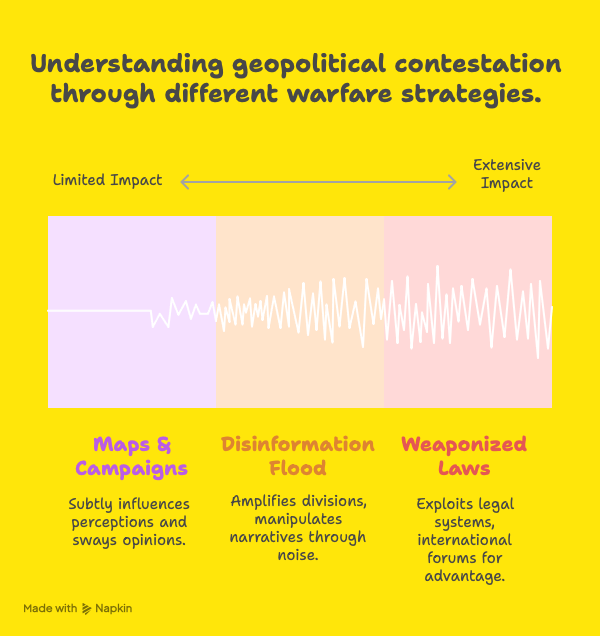
बुनियादी ढांचे के खतरों और कथात्मक खतरों का यह मिश्रण भू-राजनीतिक प्रतिद्वंद्विता की अगली सीमा को दर्शाता है। भारत की खुफिया संरचना, जो अभी भी गतिज युद्ध और शास्त्रीय आतंकवाद पर बहुत अधिक केंद्रित है, को पुनःसंतुलन की आवश्यकता है। खतरा अब हाइब्रिड है - पीडीएफ दस्तावेजों, मानवीय अनुदानों, भूमिगत वीडियो उपदेशों, डेटा माइनिंग ऐप और मिसाइलों से भी तेज गति से यात्रा करने वाले मानचित्रों से उभर रहा है। चीन का "तीन युद्ध" - मनोवैज्ञानिक, मीडिया और कानूनी - का दीर्घकालिक दृष्टिकोण तुर्की जैसे वैचारिक सहयोगियों की सहायता से उपमहाद्वीप में चुपचाप सामने आ रहा है। मानचित्रों और छात्र अभियानों के साथ मनोवैज्ञानिक मोर्चा पहले से ही सक्रिय है। मीडिया मोर्चा भारत की कमियों को लक्षित करते हुए गलत सूचनाओं, राज्य-प्रभावित समाचार खंडों और सोशल मीडिया शोर से भरा हुआ है। अंतरराष्ट्रीय मंचों पर जल्द ही कानूनी युद्ध का तत्व उभर सकता है, जहाँ सल्तनत-ए-बांग्ला जैसे मानचित्र या पूर्वोत्तर में ‘आत्मनिर्णय’ की धारणा को मानवाधिकार अभियानों के रूप में हथियार बनाया जा सकता है, जिस तरह से चीन झिंजियांग या तिब्बत के बारे में वैश्विक आख्यानों में हेरफेर करता है। जैसे-जैसे ये बहुआयामी मोर्चे खुलते हैं, भारत को न केवल बल या कूटनीति से बल्कि आख्यानात्मक लचीलेपन, साइबर-बुनियादी ढांचे की किलेबंदी और वैचारिक प्रतिवाद के साथ जवाब देना चाहिए।
ENGLISH VERSION
In 1971, India intervened decisively to liberate what is now Bangladesh, a nation born from the brutal suppression of East Pakistan by West Pakistan. It was a humanitarian, military, and political gamble that paid off—at least at the time. But history, it seems, has an uncanny ability to twist gratitude into grievance, and geopolitics rarely rewards idealism. The very people India once fought for now appear, in sections of their political and ideological leadership, to be harbouring ambitions that threaten the very idea of Indian sovereignty—particularly in the Northeast, West Bengal, Odisha, and bordering regions.
The post-1971 influx of Bangladeshi refugees, particularly Muslims, into India was tolerated under the pretext of humanitarian need. Over time, this morphed into a political opportunity for many Indian parties who eyed vote banks instead of national interests. What should have been a temporary shelter became permanent settlement, and what should have been a security warning was treated like an occasion for inclusive slogans. Under the guise of secularism and pluralism, genuine warnings by local populations, defence analysts, and border security officials were dismissed as xenophobic paranoia.
What has emerged today is not merely demographic imbalance but a clear, orchestrated threat to national security. Cities and towns in Assam, Bengal, parts of Odisha, and even Delhi have reported exponential increases in illegal Bangladeshi settlers. Over the years, some have received forged identity documents, enabling them to vote and access welfare schemes, further entrenching their presence. In many areas, native Hindus have been reduced to refugees in their own land, as ghettos transform into vote-rich, politically untouchable zones. The political silence—or worse, active patronage—of these enclaves reflects a dangerous short-sightedness.
Now, as reports emerge about Turkish-backed Islamist organizations in Dhaka promoting a map of “Greater Bangladesh” that includes Indian states, and with Chinese officials visiting Bangladesh’s strategic Lalmonirhat airbase near the Siliguri Corridor, the patterns are becoming clear. Bangladesh, once a war-torn victim, is now being cultivated by global players—Turkey, China, and perhaps even Pakistan—as a soft front to destabilize India’s eastern flank. The so-called Saltanat-e-Bangla group is not merely peddling a delusional cartography; it is laying ideological ground for territorial claims fuelled by long-nurtured sleeper communities across the border.
India must awaken from its prolonged strategic slumber. The legacy of Nehruvian idealism and post-colonial guilt cannot dictate the security policy of the world’s largest democracy in the 21st century. There is no moral debt owed to those who now covertly scheme for our fragmentation. National identity cannot be diluted for the sake of political correctness. It is time India revisits the 1971 narrative—not with nostalgia, but with hard realism. Borders must mean something. Citizenship must be protected. And above all, national security must no longer be sacrificed at the altar of ideological hypocrisy.
The subcontinental power dynamics are shifting once again, but this time not with the clang of tanks or the roar of fighter jets—instead, with the silent movement of digital cartographies, religious symbolism, ideological revivalism, and subversive alliances. India stands at a dangerous crossroads, not merely due to direct kinetic threats but because of a growing web of hybrid warfare, where the boundaries between psychological operations, civil infrastructure, military logistics, and religious radicalism blur. One of the most alarming developments in this regard is China’s growing footprint in Bangladesh, specifically around the abandoned World War II-era Lalmonirhat airbase. Just a stone’s throw away—12 to 15 kilometres—from the Indian border and a mere 135 kilometres from the ultra-strategic Siliguri Corridor, China’s subtle engagement through site inspections, advisor visits, and covert engineering surveys is not innocent. It revives a historical theater now layered with modern geopolitics. The Siliguri Corridor or ‘Chicken’s Neck’ is India’s Achilles’ heel—connecting the northeastern states to the rest of India. Any disruption here, even non-military, such as electronic warfare, cyber blackouts, or psychological disruption via local proxies, could paralyze the region’s integration with the Indian mainland. The narrative here is not just of China establishing logistical depth in an allied nation, but of Beijing’s long-game encirclement strategy—stringing pearls around India not just with ports but with airbases, satellite ground stations, and ideological cells, all under the radar of conventional detection.
Yet China is not the only external actor investing in the ideological terrain of India’s neighbors. Turkey, under President Erdoğan’s neo-Ottoman aspirations, is increasingly inserting itself into South Asian socio-political networks, primarily using Islamic NGOs as fronts for ideological expansion. In Bangladesh, a disturbing development has surfaced: a Turkish-backed group identifying as ‘Saltanat-e-Bangla’ has begun disseminating a radical revisionist map—a visual fiction of a ‘Greater Bangladesh’ encompassing India’s entire northeast, parts of eastern India including Bihar, Jharkhand, and Odisha, and even the conflict-ridden Arakan region of Myanmar. That this propaganda is circulating not in obscure corners but across universities and student-dominated areas of Dhaka is no coincidence. It reflects a targeted psychological operation aimed at youth radicalization, soft secessionist indoctrination, and a long-term destabilization campaign. Such maps are not mere political expression; they are weapons of information warfare. They frame consciousness, reorient national identities, and sow seeds of regional fracture. The echoes of pre-1971 irredentism, where both Pakistan and radical elements in Bangladesh envisioned territorial claims on northeastern India, are being revived not from within, but with support from the likes of Turkey and ideological networks that are using Islamic revivalism as a banner for political destabilization.
This growing nexus between Chinese strategic infrastructure manipulation and Turkish religious-political hybridism points to a larger pattern: the externalization of India’s internal vulnerabilities through neighboring countries. India has long believed that friendly or neutral governments on its periphery would ensure security through diplomacy and development—but that paradigm is collapsing. These new threats are not purely state-sponsored nor openly militarized. They function in a grey zone—via influencers, universities, religious charities, and digital networks. The Saltanat-e-Bangla map is a psychological bomb; its purpose is not just secession, but the delegitimization of Indian unity. These maps are layered messages—they delegitimize India’s sovereignty, reinforce ethnic or linguistic fissures, and offer utopian fantasies to disillusioned youth on both sides of the border. As India faces economic disparities in the northeast and tribal communities struggle with integration and identity, such propaganda becomes not only believable but emotionally potent.
Meanwhile, the revival of dormant airbases like Lalmonirhat, when seen in conjunction with China’s Belt and Road expansion and Turkey’s cultural-religious outreach, represents a layered strategy of “informationized encirclement.” In modern geopolitical parlance, this is no less than a new age blitzkrieg—silent, coded, and patient. The frontline is no longer merely the Line of Actual Control (LAC) or the Line of Control (LoC). It is the university campus in Dhaka, the airstrip in Lalmonirhat, the TikTok video made in Chittagong, and the digitally altered map circulated via WhatsApp in Assam or Meghalaya. China’s and Turkey’s use of proxies—whether civil contractors, religious foundations, or ideological influencers—allows them plausible deniability, while India is forced into a defensive posture, appearing paranoid or aggressive if it attempts preemptive action. Beijing’s strategic ambiguity around the Lalmonirhat airbase is particularly dangerous. It may claim dual-use intentions—civil aviation or emergency disaster response—but military analysts understand that in regions like these, the line between civil and military is one of intent, not infrastructure.
The geopolitical temperature further rises with the reappearance of Muhammad Yunus in Bangladesh’s political high table. Once celebrated as a Nobel laureate and microfinance messiah, Yunus is now being viewed in some Indian security circles as a potential vector for foreign ideological interests. His proximity to controversial actors, as well as attempts to engage with Indian leadership at international forums such as the BIMSTEC Summit, indicate a quiet diplomatic chessboard in motion. It remains to be seen whether Prime Minister Modi’s sitting beside Yunus at a Thai state dinner was merely protocol or a calculated signal, but the optics are telling. Bangladesh’s internal dynamics—compounded by student radicalization, a weakening Awami League, and a possible ideological shift—can turn it into the next frontline of information warfare in South Asia. If these developments are allowed to fester without counter-narratives, India risks witnessing a new age of indirect aggression—where maps redraw minds before they redraw borders.
This fusion of infrastructure threats and narrative threats signifies the next frontier of geopolitical contestation. India’s intelligence architecture, still heavily focused on kinetic warfare and classical counterterrorism, needs recalibration. The threat is now hybrid—emerging from PDF documents, humanitarian grants, underground video sermons, data mining apps, and maps that travel faster than missiles. China’s long-term vision of “Three Warfares”—psychological, media, and legal—appears to be quietly unfolding in the subcontinent with assistance from ideological allies like Turkey. The psychological front is already active with maps and student campaigns. The media front is flooded with disinformation, state-influenced news segments, and social media noise aimed at India’s fault lines. The legal warfare component could emerge soon in international forums where maps like Saltanat-e-Bangla or the notion of ‘self-determination’ in the northeast could be weaponized as human rights campaigns, echoing the manner in which China manipulates global narratives about Xinjiang or Tibet. As these multi-dimensional fronts open, India must respond not only with force or diplomacy but with narrative resilience, cyber-infrastructure fortification, and ideological counterinsurgency.
References List
“Dragon’s shadow near Siliguri? China aiding revival of WW2-era Bangladeshi airbase near India’s Chicken’s Neck.” The Economic Times, May 19, 2025.
“Turkey-backed NGO in Dhaka shows map including Indian states as part of ‘Greater Bangladesh’: Report.” The Financial Express, May 19, 2025.
“Chinese officials visit Lalmonirhat Airbase in Bangladesh near Chicken’s Neck corridor.” OpIndia, May 17, 2025.
“Turkey-backed group circulates ‘Greater Bangladesh’ map that includes Indian territory: Report.” Mint, May 18, 2025.
“India on Alert as China Eyes Airfield in Bangladesh Near Strategic Siliguri Corridor.” Diya TV, April 2025.
“Turkey-backed group in Bangladesh circulates ‘Greater Bangladesh’ map showing Indian territory.” The Economic Times, May 17, 2025.
“OPED: Yunus Invites China To Build Airbase In Bangladesh’s Lalmonirhat.” Eurasian Times, April 2025.
“After India cut ties, Turkey-backed group in Bangladesh circulates ‘Greater Bangladesh’ map.” India.com, May 18, 2025.
“Will recent Bangladesh-China pact pose new challenge to Siliguri Corridor?” India Sentinels, April 2025.
“Odisha shown as part of ‘Greater Bangladesh’ along with Bihar, Jharkhand; Turkey-based group behind move.” Odisha TV, May 19, 2025.
“India hits back after Yunus Northeast remark, halts transshipment facility for Dhaka.” The Indian Express, April 2025.
“Explainer: Why did India withdraw transshipment facility for Bangladesh and what are the implications?” The New Indian Express, April 9, 2025.
“China Inspects Bangladesh’s Proposed Air Base Site Near India’s ‘Chicken Neck’.” Indian Defence News, May 17, 2025.
“Saltanat-e-Bangla raises eyebrows with ‘Greater B’desh’ agenda.” News Arena India, May 16, 2025.
“Bangladesh Seeks China’s Assistance for Lalmonirhat Airbase - Idrw.” IDRW, April 2025.


Comments