
BETWEEN JOURNALISM AND POLITICAL ADVOCACY: THE CONTESTED POSITION OF KASHMIR TIMES IN THE KASHMIR CONFLICT
- S.S.TEJASKUMAR

- Nov 21, 2025
- 17 min read

Kashmir Times emerged in 1954 as a weekly publication founded by journalist Ved Bhasin, gradually evolving into a daily newspaper by 1964 in what historians describe as one of the earliest English-language press institutions operating from Jammu and later the Kashmir Valley. Researchers of South Asian media often reference Bhasin’s ideological commitments, and a number of commentators argue that his political sympathies aligned with Kashmiri self-determination narratives, including the Jammu & Kashmir Liberation Front (JKLF), though these assertions are contested in academic literature and not always backed by official documentation.[1] Bhasin’s public speeches, however, contain repeated criticisms of the heavy militarization of the region, and at various international forums—including the 2006 Washington “International Peace Conference”—he articulated the view that a long-term solution to the Kashmir dispute required inclusion of Kashmiri political voices alongside the governments of India and Pakistan.[2] At the same event, Bhasin argued for a demilitarized, autonomous political arrangement which, in his words, could form an “independent, democratic, secular, federal state,” a proposition which generated strong reactions in Indian strategic circles for being perceived as echoing separatist aspirations.[3]
Some political observers from that period also claim that Bhasin was once introduced at an event in The Hague as a “Deputy Chairman of JKLF,” an assertion repeated in activist literature but not traceable to an official JKLF roster.[4] After his death in November 2015, several diaspora-based Kashmiri separatist groups paid tribute to him, and Pakistan-based outlets referred to him using laudatory phrases such as “a voice for Kashmiri freedom,” something that Indian mainstream media called evidence of his long-standing political posture.[5] These tributes have been interpreted differently by scholars—some framing them as recognition of his human-rights advocacy, while others see them as a reflection of political alignment.
Over the decades, Kashmir Times was frequently characterized by national-security analysts as sympathetic to separatist rhetoric, especially given its editorial line during the insurgency of the 1990s and 2000s. Critics argue that the newspaper functioned as a channel amplifying JKLF- or Hurriyat-aligned positions, though defenders argue that it merely offered alternative narratives suppressed elsewhere.[6] The conflict between the newspaper and the state deepened after the Jammu & Kashmir administration decided to discontinue government advertisements, which had constituted a significant portion of the paper’s revenue stream. Analysts have described this withdrawal as part of a broader tension between state institutions and media organizations perceived to be opposing official policy, a tension reflected across several Indian states during periods of political contestation.[7]
Controversy intensified in October 2020, when the J&K Estate Department issued eviction orders for two government properties allegedly occupied by Kashmir Times and the family of Ved Bhasin. According to official statements, the properties—one in Srinagar and one in Jammu—were being used without valid authorization beyond their allotted tenure.[8] Anuradha Bhasin, the executive editor and daughter of Ved Bhasin, publicly countered these claims, stating that due process was not followed and alleging harassment by state authorities. She further claimed that the residence she had occupied since 1999 had been forcibly sealed without prior notice, a claim partially disputed by estate officials who asserted that formal notices had indeed been served.[9]
Amidst these events, Anuradha Bhasin accused individuals linked to a former legislator of vandalizing her premises, an allegation reported by several media outlets though no conclusive inquiry has been made public. Her long-standing criticism of Indian state policy intensified after the August 2019 abrogation of Article 370, following which she filed a petition before the Supreme Court of India arguing that communications blackouts impaired press freedom in Kashmir. Her petition became one of the earliest high-profile legal challenges to the post-370 administrative measures.[10]
This legal action drew political reactions across the spectrum. Former J&K Chief Minister Mehbooba Mufti claimed that the eviction was part of a “vendetta playbook” targeting dissenters, while the digital outlet The Wire published sympathetic profiles of Anuradha Bhasin describing her as a journalist facing punitive state action.[11] Critics, however, pointed out that Kashmir Times had received state-owned accommodation and substantial advertisement support for decades, raising questions about conflict of interest and whether a media house should maintain editorial independence while receiving such privileges. Pro-establishment commentators framed this as evidence of a “patronage-based media ecosystem” that allowed narratives against the state while being indirectly funded by taxpayer money.[12]
Anuradha Bhasin’s academic history also attracted scrutiny when her earlier research paper titled “Fuelling the Rage in Kashmir”, published by JSTOR in 2010, resurfaced in public debate. In the paper, she critiqued security forces for alleged human-rights violations, including what she described as “impunity-driven violence,” referencing civilian deaths, including minors, during periods of conflict.[13] Human-rights advocates praised the work for documenting grievances ignored by mainstream media, while critics argued that it relied heavily on activist accounts and insufficiently verified data. Nonetheless, the paper remains widely cited in discussions concerning conflict journalism in Kashmir.
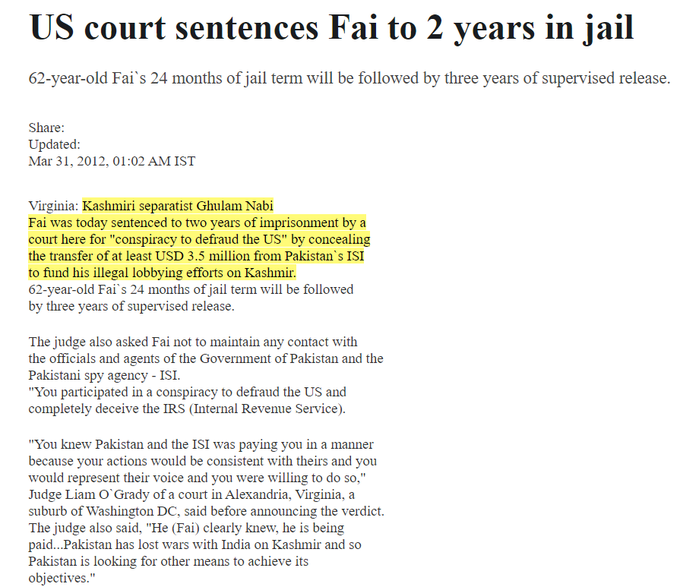
Connections between the Bhasin family and international advocacy networks also became a significant part of the public discourse. Multiple reports and U.S. congressional documents reference that both Ved Bhasin and Anuradha Bhasin attended events of the Kashmiri American Council (KAC), an organization founded in Washington, D.C., by Syed Ghulam Nabi Fai. Fai, a U.S. citizen of Kashmiri origin, was known for organizing the annual “Kashmir Peace Conference,” which claimed to provide independent platforms for diverse Kashmiri voices.[14] However, in 2011 the U.S. Department of Justice charged Fai with operating as an unregistered agent of Pakistan’s Inter-Services Intelligence (ISI), alleging that he had covertly received approximately USD 3.5 million from the ISI to influence U.S. policy on Kashmir. He later pleaded guilty to federal charges, stating during court proceedings that funds were directed toward advocacy efforts, including seminars and congressional outreach.[15]
Court filings from the case revealed that the ISI had vetted speaker lists for KAC conferences and provided talking points to advance Pakistan’s policy positions. This revelation significantly altered global perceptions of the organization and undermined its claims of independence.[16] The presence of several Indian activists, academics, and journalists—including those aligned with left-leaning platforms—at KAC events became a point of contention in Indian political debates. Although attendance at such conferences is not itself illegal, critics suggest it created an appearance of association with foreign-funded lobbying.
Anuradha Bhasin’s public defense of Fai in various writings, where she suggested that U.S. authorities might have exaggerated the scale of wrongdoing, further fueled criticism. This became more contentious after Fai himself admitted to concealing foreign funding, contradicting some of the arguments made in his defense by sympathizers.[17]
Prominent activist-journalist Gautam Navlakha—at the time associated with The Wire—had also engaged with KAC networks, according to U.S. congressional hearing records and court testimonies. When the J&K estate office sealed the Bhasin properties, Navlakha was among the first to publicly defend Anuradha, calling the action politically motivated. His stance was heavily criticized by security commentators due to his later arrest in India in connection with unrelated cases involving alleged Maoist links, though he denies all charges.[18]
The narrative became even more complex with the involvement of American political consultant Paul Manafort. Declassified U.S. records and testimonies indicate that in the early 1990s, Manafort’s lobbying company, Black, Manafort, Stone & Kelly, worked for the KAC for a reported fee of USD 700,000 over five years.[19] Manafort’s mandate involved lobbying U.S. lawmakers and shaping public opinion on Kashmir. Scholars of lobbying ethics have frequently cited this arrangement as a case study of how foreign governments use private firms to influence American foreign policy through indirect channels.
In 1994, Manafort and K. Riva Levinson traveled to India on tourist visas to visit Kashmir, reportedly collecting footage for advocacy materials. Indian authorities later accused them of misrepresenting themselves as CNN journalists, although both denied the claim and CNN officially stated the footage was never part of their programming.[20] The incident is now discussed in political-communication literature as an example of cross-border narrative manipulation during the early phase of global media expansion.
Manafort’s later indictment in 2018 for unrelated charges involving tax fraud, bank fraud, and unregistered foreign lobbying tied to Ukrainian political interests indirectly revived interest in his earlier KAC-linked activities. For many policymakers, this demonstrated the long-term complexities of global lobbying networks influencing sensitive geopolitical topics such as Kashmir.[21]
The KAC scandal also implicated U.S. Representative Dan Burton, who was reported in Justice Department documents as having received donations linked to individuals later charged in the Fai case. Burton had previously initiated a “Kashmir Caucus” in the U.S. Congress, and critics argue that such lobbying efforts influenced congressional perspectives on human rights in Kashmir. However, no wrongdoing was established against Burton, and receiving donations was not illegal unless knowingly connected to foreign intelligence funding.[22]
In the Indian domestic context, tensions resurfaced in 2025 after NIA searches reportedly uncovered weapons components—hand-grenade pins, AK-47 rounds, and a pistol—from premises associated with Kashmir Times. Investigators have not yet released a full public report, and the findings remain under legal scrutiny, but the incident triggered intense debate over whether extremist groups had attempted to exploit journalistic infrastructures or whether the materials were unrelated to the organization’s activities.[23] Supporters of the Bhasin family argue that the allegations are politically motivated, while others interpret the incident as a sign of deeper infiltration risks in the Valley’s civil society institutions.
The broader debate highlights the enduring contest between narratives of press freedom and national security. On one hand, journalists in conflict regions often face allegations from state agencies, and some may indeed adopt sharply critical positions in response to militarization. On the other hand, intelligence agencies routinely warn about foreign influence operations using civil-society groups, NGOs, and media platforms as intermediaries. Kashmir, given its geopolitical sensitivity, sits at the intersection of these competing forces, and Kashmir Times—through its history, ideological evolution, and international associations—has become emblematic of how the media becomes a battleground for competing sovereignties, ideologies, and geopolitical objectives.
This complex ecosystem is further complicated by the role of digital-native media in shaping perceptions. Outlets such as The Wire and others with ideological leanings have been accused by nationalist commentators of selectively defending individuals aligned with anti-government positions, while digital-right activists argue that such platforms prevent the erasure of dissent by dominant political interests. The interplay of partisan journalism, external lobbying, and geopolitical narratives therefore raises profound questions about informational sovereignty, public accountability, and the ethics of journalism in conflict zones.
Anuradha Bhasin’s career encapsulates these contradictions: she positions herself as a defender of press freedom, challenging censorship and state overreach, while her critics frame her as part of a network that received benefits from successive governments and international advocacy groups aligned with foreign policy agendas. Both portrayals are interpretations shaped by ideological lenses, and the truth likely lies in a complex middle ground where personal conviction, structural incentives, and political networks intersect.
The legacy of Kashmir Times, likewise, cannot be reduced to a single narrative. It is simultaneously a newspaper that offered alternative perspectives during decades of conflict, a publication accused of sympathizing with separatist rhetoric, an institution entangled in bureaucratic privileges, and a participant—willingly or unintentionally—in transnational advocacy ecosystems with opaque funding histories. The interplay of all these elements forms the basis of an important case study for scholars exploring the entanglement of media, geopolitics, diaspora lobbying, and internal conflict within modern nation-states.
References
Independent assessments of Bhasin’s political affiliations vary widely; see multiple biographical commentaries in regional media archives.
Proceedings of the Sixth International Peace Conference, Washington D.C., 2006.
Ibid.
Claims appear in diaspora activist blogs; no official JKLF roster confirms the designation.
Pakistan-based newspapers, various editions, November 2015.
Conflict journalism analyses by South Asian media scholars.
Government advertisement records, J&K Administrative Department.
J&K Estate Department Notices, October 2020 (publicly reported).
Media interviews of Anuradha Bhasin, 2020–2021.
Supreme Court of India, Writ Petition (Anuradha Bhasin v. Union of India, 2019).
The Wire, “Meet Anuradha Bhasin,” October 2020.
Commentary by Indian public-policy analysts across multiple newspapers.
Anuradha Bhasin, “Fuelling the Rage in Kashmir,” JSTOR, 2010.
Congressional records: Kashmir American Council events.
U.S. Department of Justice, Fai Case Filings, 2011.
FBI Affidavit in U.S. v. Syed Ghulam Nabi Fai.
Countercurrents articles written by Anuradha Bhasin.
Statements by Gautam Navlakha in public interviews.
Manafort lobbying contracts, declassified U.S. filings.
Statements from CNN and Indian officials, 1994 media reports.
U.S. DOJ Indictment: Manafort, 2018.
Congressional ethics records linked to campaign donations.
Media reports on NIA searches, 2025 (official investigation pending).
U.S. Department of Justice. United States vs. Syed Ghulam Nabi Fai (2011).
Supreme Court of India. Anuradha Bhasin v. Union of India, 2019 judgment.
Congressional Research Service, Reports on Foreign Lobbying.
JSTOR Database: Bhasin, Anuradha. “Fuelling the Rage in Kashmir,” 2010.
Various archival news reports from The Hindu, Indian Express, Dawn, The News International, Washington Post, and New York Times.
FBI Court Filings (Eastern District of Virginia) re: KAC investigation.
हिंदी अनुवाद
कश्मीर टाइम्स 1954 में पत्रकार वेद भसीन द्वारा स्थापित एक साप्ताहिक प्रकाशन के रूप में उभरा, जो धीरे-धीरे 1964 तक एक दैनिक समाचार पत्र में विकसित हुआ, जिसे इतिहासकार जम्मू और बाद में कश्मीर घाटी से संचालित होने वाले शुरुआती अंग्रेजी भाषा के प्रेस संस्थानों में से एक बताते हैं। दक्षिण एशियाई मीडिया के शोधकर्ता अक्सर भसीन की वैचारिक प्रतिबद्धताओं का संदर्भ देते हैं, और कई टिप्पणीकार तर्क देते हैं कि उनकी राजनीतिक सहानुभूति कश्मीरी आत्मनिर्णय कथाओं के साथ जुड़ी हुई थी, जिसमें जम्मू और कश्मीर लिबरेशन फ्रंट (JKLF) भी शामिल है, हालांकि इन दावों को अकादमिक साहित्य में चुनौती दी गई है और हमेशा आधिकारिक दस्तावेजों द्वारा समर्थित नहीं हैं।[1] हालांकि, भसीन के सार्वजनिक भाषणों में क्षेत्र के भारी सैन्यीकरण की बार-बार आलोचना शामिल है, और विभिन्न अंतरराष्ट्रीय मंचों पर - जिसमें 2006 का वाशिंगटन "अंतर्राष्ट्रीय शांति सम्मेलन" भी शामिल है - उन्होंने यह विचार व्यक्त किया कि कश्मीर विवाद के दीर्घकालिक समाधान के लिए भारत और पाकिस्तान की सरकारों के साथ-साथ कश्मीरी राजनीतिक आवाज़ों को शामिल करना आवश्यक है।[2] उसी इवेंट में, भसीन ने एक डीमिलिटराइज्ड, ऑटोनॉमस पॉलिटिकल अरेंजमेंट की बात कही, जो उनके शब्दों में, एक “इंडिपेंडेंट, डेमोक्रेटिक, सेक्युलर, फेडरल स्टेट” बना सके। इस बात पर इंडियन स्ट्रेटेजिक सर्कल में कड़ी प्रतिक्रियाएं हुईं क्योंकि इसे सेपरेटिस्ट उम्मीदों की झलक माना गया।[3]
उस समय के कुछ पॉलिटिकल ऑब्जर्वर यह भी दावा करते हैं कि भसीन को एक बार हेग में एक इवेंट में “JKLF के डिप्टी चेयरमैन” के तौर पर इंट्रोड्यूस किया गया था। यह बात एक्टिविस्ट लिटरेचर में भी दोहराई गई थी, लेकिन JKLF के ऑफिशियल रोस्टर में इसका कोई पता नहीं चला।[4] नवंबर 2015 में उनकी मौत के बाद, कई डायस्पोरा-बेस्ड कश्मीरी सेपरेटिस्ट ग्रुप्स ने उन्हें श्रद्धांजलि दी, और पाकिस्तान-बेस्ड आउटलेट्स ने उन्हें “कश्मीरी आजादी के लिए एक आवाज” जैसे तारीफ वाले शब्दों का इस्तेमाल करते हुए रेफर किया, जिसे इंडियन मेनस्ट्रीम मीडिया ने उनके लंबे समय से चले आ रहे पॉलिटिकल स्टैंड का सबूत बताया।[5] इन श्रद्धांजलियों का स्कॉलर्स ने अलग-अलग मतलब निकाला है—कुछ लोग इसे उनके ह्यूमन-राइट्स एडवोकेसी की पहचान के तौर पर देखते हैं, जबकि दूसरे इसे पॉलिटिकल अलायंस की झलक के तौर पर देखते हैं।
दशकों से, नेशनल सिक्योरिटी एनालिस्ट कश्मीर टाइम्स को अक्सर अलगाववादी बयानबाजी के प्रति हमदर्दी रखने वाला बताते रहे हैं, खासकर 1990 और 2000 के दशक के विद्रोह के दौरान इसकी एडिटोरियल लाइन को देखते हुए। आलोचकों का तर्क है कि अखबार JKLF या हुर्रियत से जुड़े विचारों को बढ़ावा देने वाले चैनल के तौर पर काम करता था, हालांकि बचाव करने वालों का तर्क है कि यह सिर्फ़ दूसरी जगहों पर दबाए गए दूसरे नैरेटिव पेश करता था।[6] जम्मू-कश्मीर प्रशासन के सरकारी विज्ञापनों को बंद करने का फैसला करने के बाद अखबार और राज्य के बीच टकराव और गहरा हो गया, जो अखबार के रेवेन्यू का एक बड़ा हिस्सा थे। एनालिस्ट ने इस वापसी को सरकारी संस्थानों और मीडिया संगठनों के बीच बड़े तनाव का हिस्सा बताया है, जिन्हें सरकारी पॉलिसी का विरोध करने वाला माना जाता है, यह तनाव राजनीतिक मुकाबले के समय कई भारतीय राज्यों में दिखता है।[7]
अक्टूबर 2020 में विवाद और बढ़ गया, जब J&K एस्टेट डिपार्टमेंट ने कश्मीर टाइम्स और वेद भसीन के परिवार द्वारा कथित तौर पर कब्ज़े वाली दो सरकारी प्रॉपर्टीज़ को खाली करने के ऑर्डर जारी किए। ऑफिशियल बयानों के मुताबिक, प्रॉपर्टीज़ – एक श्रीनगर में और एक जम्मू में – को उनके तय समय से ज़्यादा बिना किसी वैलिड ऑथराइज़ेशन के इस्तेमाल किया जा रहा था।[8] एग्जीक्यूटिव एडिटर और वेद भसीन की बेटी अनुराधा भसीन ने इन दावों का पब्लिकली विरोध किया, और कहा कि सही प्रोसेस फॉलो नहीं किया गया और स्टेट अथॉरिटीज़ पर परेशान करने का आरोप लगाया। उन्होंने आगे दावा किया कि जिस घर में वह 1999 से रह रही थीं, उसे बिना किसी पहले नोटिस के ज़बरदस्ती सील कर दिया गया था, इस दावे का एस्टेट अधिकारियों ने थोड़ा विरोध किया, जिन्होंने कहा कि फॉर्मल नोटिस सच में दिए गए थे।[9]
इन घटनाओं के बीच, अनुराधा भसीन ने एक पूर्व लेजिस्लेटर से जुड़े लोगों पर उनके घर में तोड़फोड़ करने का आरोप लगाया, इस आरोप को कई मीडिया आउटलेट्स ने रिपोर्ट किया, हालांकि कोई पक्की जांच पब्लिक नहीं की गई है। अगस्त 2019 में आर्टिकल 370 हटाने के बाद इंडियन स्टेट पॉलिसी की उनकी लंबे समय से चली आ रही आलोचना और तेज़ हो गई, जिसके बाद उन्होंने सुप्रीम कोर्ट ऑफ़ इंडिया में एक पिटीशन फाइल की जिसमें कहा गया कि कम्युनिकेशन ब्लैकआउट ने कश्मीर में प्रेस की आज़ादी को कमज़ोर किया। उनकी पिटीशन 370 के बाद के एडमिनिस्ट्रेटिव उपायों के लिए सबसे शुरुआती हाई-प्रोफाइल लीगल चैलेंज में से एक बन गई।[10]
इस कानूनी कार्रवाई पर हर तरफ से राजनीतिक प्रतिक्रियाएं आईं। J&K की पूर्व मुख्यमंत्री महबूबा मुफ्ती ने दावा किया कि बेदखली असहमति जताने वालों को निशाना बनाने वाली “बदले की चाल” का हिस्सा थी, जबकि डिजिटल आउटलेट द वायर ने अनुराधा भसीन की हमदर्दी भरी प्रोफाइल पब्लिश की, जिसमें उन्हें एक पत्रकार बताया गया, जिस पर राज्य की सज़ा वाली कार्रवाई हो रही है।[11] हालांकि, आलोचकों ने बताया कि कश्मीर टाइम्स को दशकों से राज्य की सुविधा और काफी विज्ञापन मिले थे, जिससे हितों के टकराव और क्या किसी मीडिया हाउस को ऐसे विशेषाधिकार मिलने पर भी एडिटोरियल आज़ादी बनाए रखनी चाहिए, इस पर सवाल उठे। सत्ता-समर्थक टिप्पणीकारों ने इसे “संरक्षण-आधारित मीडिया इकोसिस्टम” के सबूत के तौर पर पेश किया, जिसने करदाताओं के पैसे से अप्रत्यक्ष रूप से फंड किए जाने के बावजूद राज्य के खिलाफ नैरेटिव को अनुमति दी।[12]
अनुराधा भसीन के एकेडमिक इतिहास पर भी तब सवाल उठे जब 2010 में JSTOR द्वारा पब्लिश किया गया उनका पिछला रिसर्च पेपर “फ्यूलिंग द रेज इन कश्मीर” फिर से पब्लिक डिबेट में सामने आया। पेपर में, उन्होंने कथित ह्यूमन-राइट्स उल्लंघन के लिए सिक्योरिटी फोर्स की आलोचना की, जिसमें उन्होंने “दंड से बचने के लिए की गई हिंसा” भी शामिल है, जिसमें संघर्ष के समय नाबालिगों सहित आम लोगों की मौत का ज़िक्र था।[13] ह्यूमन-राइट्स के समर्थकों ने मेनस्ट्रीम मीडिया द्वारा नज़रअंदाज़ की गई शिकायतों को डॉक्यूमेंट करने के लिए काम की तारीफ़ की, जबकि आलोचकों ने तर्क दिया कि यह एक्टिविस्ट अकाउंट्स और काफ़ी वेरिफाइड डेटा पर बहुत ज़्यादा निर्भर था। फिर भी, कश्मीर में संघर्ष पत्रकारिता से जुड़ी चर्चाओं में पेपर का काफ़ी ज़िक्र होता है।
भसीन परिवार और इंटरनेशनल एडवोकेसी नेटवर्क के बीच कनेक्शन भी पब्लिक डिस्कोर्स का एक अहम हिस्सा बन गए। कई रिपोर्ट्स और U.S. कांग्रेस के डॉक्यूमेंट्स में बताया गया है कि वेद भसीन और अनुराधा भसीन दोनों ने कश्मीरी अमेरिकन काउंसिल (KAC) के इवेंट्स में हिस्सा लिया था, यह एक ऑर्गनाइज़ेशन है जिसे वाशिंगटन, D.C. में सैयद गुलाम नबी फ़ई ने शुरू किया था। फ़ई, जो कश्मीरी मूल के U.S. नागरिक थे, सालाना “कश्मीर पीस कॉन्फ्रेंस” ऑर्गनाइज़ करने के लिए जाने जाते थे, जिसका दावा था कि यह अलग-अलग कश्मीरी आवाज़ों के लिए इंडिपेंडेंट प्लेटफ़ॉर्म देता है।[14] लेकिन, 2011 में U.S. डिपार्टमेंट ऑफ़ जस्टिस ने फ़ई पर पाकिस्तान की इंटर-सर्विसेज़ इंटेलिजेंस (ISI) के एक अनरजिस्टर्ड एजेंट के तौर पर काम करने का आरोप लगाया, जिसमें आरोप लगाया गया कि उसने कश्मीर पर U.S. पॉलिसी को प्रभावित करने के लिए ISI से चुपके से लगभग USD 3.5 मिलियन लिए थे। बाद में उसने फ़ेडरल आरोपों में अपना गुनाह कबूल कर लिया, और कोर्ट की कार्रवाई के दौरान कहा कि फ़ंड सेमिनार और कांग्रेसनल आउटरीच सहित एडवोकेसी के कामों के लिए दिए गए थे।[15]
केस से जुड़ी कोर्ट फ़ाइलिंग से पता चला कि ISI ने KAC कॉन्फ्रेंस के लिए स्पीकर लिस्ट की जांच की थी और पाकिस्तान की पॉलिसी को आगे बढ़ाने के लिए टॉकिंग पॉइंट दिए थे। इस खुलासे ने संगठन के बारे में दुनिया भर की सोच को काफ़ी बदल दिया और उसकी आज़ादी के दावों को कमज़ोर कर दिया।[16] KAC इवेंट्स में कई भारतीय एक्टिविस्ट, एकेडेमिक्स और पत्रकारों की मौजूदगी – जिनमें लेफ़्ट-लीनिंग प्लेटफ़ॉर्म से जुड़े लोग भी शामिल थे – भारतीय पॉलिटिकल बहसों में बहस का मुद्दा बन गई। हालांकि ऐसी कॉन्फ्रेंस में जाना अपने आप में गैर-कानूनी नहीं है, लेकिन क्रिटिक्स का कहना है कि इससे विदेशी फ़ंडेड लॉबिंग से जुड़ाव का आभास होता है।
अनुराधा भसीन ने अलग-अलग लेखों में फई का पब्लिक में बचाव किया, जिसमें उन्होंने कहा कि U.S. अधिकारियों ने शायद गलत कामों के पैमाने को बढ़ा-चढ़ाकर बताया है, जिससे आलोचना और बढ़ गई। यह तब और विवादित हो गया जब फई ने खुद विदेशी फंडिंग छिपाने की बात मान ली, जो उनके बचाव में उनके समर्थकों द्वारा दी गई कुछ दलीलों से अलग थी।[17]
U.S. कांग्रेस की सुनवाई के रिकॉर्ड और कोर्ट में गवाही के मुताबिक, जाने-माने एक्टिविस्ट-पत्रकार गौतम नवलखा – जो उस समय द वायर से जुड़े थे – ने भी KAC नेटवर्क के साथ काम किया था। जब J&K एस्टेट ऑफिस ने भसीन की प्रॉपर्टीज़ सील कीं, तो नवलखा उन पहले लोगों में से थे जिन्होंने पब्लिक में अनुराधा का बचाव किया, और इस कार्रवाई को राजनीति से प्रेरित बताया। कथित माओवादी लिंक से जुड़े दूसरे मामलों में बाद में भारत में उनकी गिरफ्तारी के कारण सुरक्षा जानकारों ने उनके रुख की बहुत आलोचना की, हालांकि उन्होंने सभी आरोपों से इनकार किया।[18]
अमेरिकी राजनीतिक सलाहकार पॉल मैनाफोर्ट के शामिल होने से कहानी और भी जटिल हो गई। अवर्गीकृत अमेरिकी रिकॉर्ड और गवाही से पता चलता है कि 1990 के दशक की शुरुआत में, मैनाफोर्ट की लॉबिंग कंपनी, ब्लैक, मैनाफोर्ट, स्टोन एंड केली, ने पांच सालों में 700,000 अमेरिकी डॉलर की कथित फीस पर KAC के लिए काम किया।[19] मैनाफोर्ट के काम में अमेरिकी सांसदों की लॉबिंग करना और कश्मीर पर जनता की राय बनाना शामिल था। लॉबिंग नैतिकता के विद्वानों ने अक्सर इस व्यवस्था का हवाला एक केस स्टडी के रूप में दिया है कि कैसे विदेशी सरकारें अप्रत्यक्ष चैनलों के माध्यम से अमेरिकी विदेश नीति को प्रभावित करने के लिए निजी फर्मों का उपयोग करती हैं।
1994 में, मैनाफोर्ट और के. रीवा लेविंसन ने कश्मीर का दौरा करने के लिए पर्यटक वीजा पर भारत की यात्रा की, कथित तौर पर वकालत सामग्री के लिए फुटेज एकत्र की। भारतीय अधिकारियों ने बाद में उन पर खुद को CNN पत्रकार के रूप में गलत तरीके से प्रस्तुत करने का आरोप लगाया, हालांकि दोनों ने इस दावे से इनकार किया और CNN ने आधिकारिक तौर पर कहा कि फुटेज कभी भी उनके प्रोग्रामिंग का हिस्सा नहीं था।[20] इस घटना पर अब पॉलिटिकल-कम्युनिकेशन लिटरेचर में ग्लोबल मीडिया के विस्तार के शुरुआती दौर में क्रॉस-बॉर्डर नैरेटिव मैनिपुलेशन के एक उदाहरण के तौर पर चर्चा की जाती है।
2018 में टैक्स फ्रॉड, बैंक फ्रॉड और यूक्रेनी पॉलिटिकल हितों से जुड़े अनरजिस्टर्ड विदेशी लॉबिंग से जुड़े अलग-अलग आरोपों के लिए मैनाफोर्ट पर बाद में आरोप तय होने से, उनकी पहले की KAC से जुड़ी गतिविधियों में अप्रत्यक्ष रूप से दिलचस्पी फिर से जाग गई। कई पॉलिसी बनाने वालों के लिए, इसने कश्मीर जैसे सेंसिटिव जियोपॉलिटिकल विषयों को प्रभावित करने वाले ग्लोबल लॉबिंग नेटवर्क की लंबे समय की जटिलताओं को दिखाया।[21]
KAC स्कैंडल में U.S. रिप्रेजेंटेटिव डैन बर्टन भी शामिल थे, जिनके बारे में जस्टिस डिपार्टमेंट के डॉक्यूमेंट्स में बताया गया था कि उन्हें ऐसे लोगों से जुड़े डोनेशन मिले थे जिन पर बाद में फई केस में आरोप लगे थे। बर्टन ने पहले U.S. कांग्रेस में एक “कश्मीर कॉकस” शुरू किया था, और आलोचकों का तर्क है कि इस तरह की लॉबिंग की कोशिशों ने कश्मीर में ह्यूमन राइट्स पर कांग्रेस के नज़रिए को प्रभावित किया। हालांकि, बर्टन के खिलाफ कोई गलत काम साबित नहीं हुआ, और डोनेशन लेना तब तक गैर-कानूनी नहीं था जब तक कि जानबूझकर विदेशी इंटेलिजेंस फंडिंग से जुड़ा न हो।[22]
भारत के घरेलू संदर्भ में, 2025 में तनाव फिर से शुरू हो गया जब NIA की तलाशी में कश्मीर टाइम्स से जुड़े ठिकानों से हथियारों के पुर्जे मिले – हैंड-ग्रेनेड पिन, AK-47 राउंड और एक पिस्तौल। जांच करने वालों ने अभी तक पूरी पब्लिक रिपोर्ट जारी नहीं की है, और नतीजे अभी भी कानूनी जांच के दायरे में हैं, लेकिन इस घटना ने इस बात पर ज़ोरदार बहस छेड़ दी कि क्या कट्टरपंथी ग्रुप्स ने पत्रकारिता के इंफ्रास्ट्रक्चर का फ़ायदा उठाने की कोशिश की थी या क्या ये चीज़ें संगठन की गतिविधियों से जुड़ी नहीं थीं।[23] भसीन परिवार के समर्थक तर्क देते हैं कि आरोप राजनीति से प्रेरित हैं, जबकि दूसरे इस घटना को घाटी के सिविल सोसाइटी संस्थानों में गहरी घुसपैठ के खतरे के संकेत के रूप में देखते हैं।
यह बड़ी बहस प्रेस की आज़ादी और राष्ट्रीय सुरक्षा के नैरेटिव के बीच लंबे समय से चल रहे मुकाबले को दिखाती है। एक तरफ, संघर्ष वाले इलाकों में पत्रकारों को अक्सर सरकारी एजेंसियों के आरोपों का सामना करना पड़ता है, और कुछ तो मिलिटराइज़ेशन के जवाब में वाकई में तीखी आलोचना कर सकते हैं। दूसरी तरफ, इंटेलिजेंस एजेंसियां अक्सर सिविल-सोसाइटी ग्रुप्स, NGOs और मीडिया प्लेटफॉर्म्स को बिचौलिए के तौर पर इस्तेमाल करके विदेशी असर वाले ऑपरेशन्स के बारे में चेतावनी देती रहती हैं। कश्मीर, अपनी जियोपॉलिटिकल सेंसिटिविटी को देखते हुए, इन मुकाबला करने वाली ताकतों के बीच में है, और कश्मीर टाइम्स—अपने इतिहास, सोच में बदलाव और इंटरनेशनल जुड़ाव के ज़रिए—इस बात की निशानी बन गया है कि कैसे मीडिया मुकाबला करने वाली सॉवरेनिटी, सोच और जियोपॉलिटिकल मकसदों के लिए लड़ाई का मैदान बन जाता है।
यह मुश्किल इकोसिस्टम डिजिटल-नेटिव मीडिया की सोच को बनाने की भूमिका से और भी मुश्किल हो जाता है। द वायर जैसे आउटलेट और दूसरी विचारधाराओं वाले मीडिया पर राष्ट्रवादी कमेंट करने वालों ने सरकार विरोधी सोच वाले लोगों का चुनिंदा तरीके से बचाव करने का आरोप लगाया है, जबकि डिजिटल-राइट एक्टिविस्ट का तर्क है कि ऐसे प्लेटफॉर्म बड़े राजनीतिक हितों के लिए असहमति को खत्म होने से रोकते हैं। इसलिए, एकतरफ़ा पत्रकारिता, बाहरी लॉबिंग और जियोपॉलिटिकल कहानियों का आपसी तालमेल, सूचना की संप्रभुता, जनता की जवाबदेही और संघर्ष वाले इलाकों में पत्रकारिता की नैतिकता पर गहरे सवाल खड़े करता है।
अनुराधा भसीन का करियर इन विरोधाभासों को दिखाता है: वह खुद को प्रेस की आज़ादी की रक्षक के तौर पर पेश करती हैं, सेंसरशिप और सरकार के दखल को चुनौती देती हैं, जबकि उनके आलोचक उन्हें एक ऐसे नेटवर्क का हिस्सा बताते हैं जिसे विदेश नीति के एजेंडा से जुड़ी एक के बाद एक सरकारों और इंटरनेशनल एडवोकेसी ग्रुप से फ़ायदा मिला है। दोनों ही चित्रण विचारधारा के नज़रिए से तय किए गए मतलब हैं, और सच्चाई शायद एक मुश्किल बीच के रास्ते पर है जहाँ निजी सोच, स्ट्रक्चरल फायदे और राजनीतिक नेटवर्क एक-दूसरे से मिलते हैं।
इसी तरह, कश्मीर टाइम्स की विरासत को भी एक ही कहानी में नहीं बताया जा सकता। यह एक ही समय में एक ऐसा अखबार है जिसने दशकों के संघर्ष के दौरान अलग नज़रिए पेश किए, एक ऐसा पब्लिकेशन जिस पर अलगाववादी बयानबाज़ी से हमदर्दी रखने का आरोप है, एक ऐसा इंस्टीट्यूशन जो ब्यूरोक्रेटिक खास अधिकारों में उलझा हुआ है, और एक ऐसा हिस्सा है – चाहे जान-बूझकर या अनजाने में – जो ऐसे ट्रांसनेशनल एडवोकेसी इकोसिस्टम में शामिल है जिनकी फंडिंग हिस्ट्री साफ़ नहीं है। इन सभी चीज़ों का आपसी तालमेल, मीडिया, जियोपॉलिटिक्स, डायस्पोरा लॉबिंग और मॉडर्न देशों के अंदर के झगड़ों की पड़ताल करने वाले जानकारों के लिए एक ज़रूरी केस स्टडी का आधार बनता है।




Comments