
LOBITO CORRIDOR: REVIVAL, RESOURCES, AND RIVALRY
- S.S.TEJASKUMAR

- Feb 8
- 13 min read

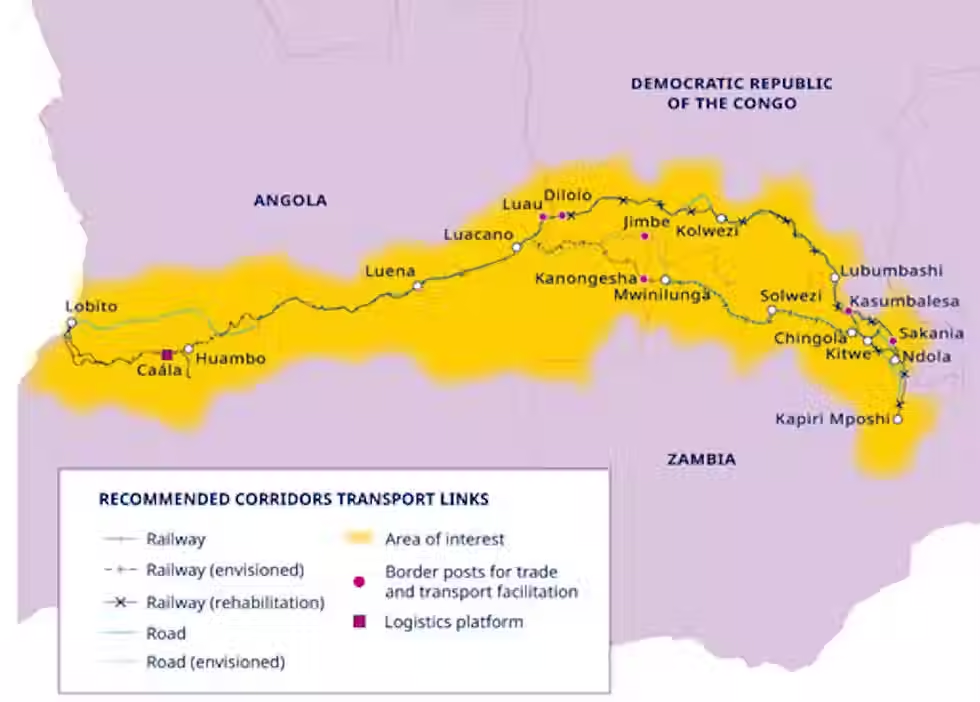
Angola’s Lobito Corridor represents far more than a logistical revival project; it embodies the reconfiguration of global power competition, resource geopolitics, and the enduring legacies of colonial extraction. Stretching from the Atlantic port city of Lobito across Angola’s mineral-rich interior and extending into the Democratic Republic of Congo (DRC) and Zambia, the corridor has historically functioned as a conduit through which external actors accessed African raw materials while leaving local developmental aspirations largely unrealized. The corridor’s backbone, the Benguela Railway, originally constructed between 1903 and 1931 under Portuguese colonial administration, was designed primarily to accelerate the export of copper and other minerals to European markets. The railway exemplified the colonial spatial logic that prioritized export-oriented infrastructure over domestic integration, ensuring that resource-rich hinterlands remained functionally dependent on coastal extraction nodes rather than fostering diversified regional economies. This infrastructural blueprint entrenched Angola’s peripheral position in global commodity chains and established patterns of unequal exchange that continue to shape contemporary economic trajectories (European Commission, 2023; Birmingham, 2015).
Following Angola’s independence in 1975, the railway’s destruction during the prolonged civil war demonstrated how infrastructure in post-colonial states often becomes collateral in internal conflicts fueled by Cold War rivalries and competition over natural resources. The railway’s collapse mirrored the broader fragmentation of Angola’s productive economy, which gradually shifted toward overwhelming dependence on offshore oil revenues during the late twentieth century. When reconstruction efforts began in the early 2000s, Chinese state-backed loans and construction firms played a decisive role in rebuilding the Benguela Railway, reflecting Beijing’s broader strategy of securing resource access through infrastructure diplomacy. Chinese financing between 2006 and 2014 not only restored Angola’s transportation capacity but also deepened the country’s debt obligations and economic interdependence with Chinese markets. This pattern corresponds to the broader Belt and Road Initiative model, wherein infrastructure development is integrated with commodity supply chain control and long-term geopolitical leverage (Corkin, 2013; Brautigam, 2020).
The recent shift in operational control from Chinese interests to a Western consortium composed of Trafigura, Mota-Engil, and Vecturis signals a significant geopolitical recalibration. The 30-year concession awarded in 2023 reflects the intensifying strategic competition between Western powers and China over access to critical minerals essential for renewable energy technologies and digital infrastructure. Cobalt and copper extracted from the Central African Copperbelt have become indispensable for lithium-ion batteries, electric vehicles, and advanced communication systems, placing the Lobito Corridor at the center of the global green transition economy. The DRC alone produces over seventy percent of global cobalt, while Zambia remains a major copper supplier, making efficient export corridors an economic and strategic necessity for industrialized nations seeking to reduce reliance on Chinese-controlled supply chains. The corridor therefore operates not merely as infrastructure but as a strategic chokepoint within emerging global energy transition geopolitics (International Energy Agency, 2022; US Geological Survey, 2024).
High-level diplomatic engagement surrounding the corridor further underscores its geopolitical significance. Visits by senior Western political leaders, including U.S. and European officials, symbolize an attempt to reposition Western engagement in Africa around infrastructure and development partnerships as alternatives to Chinese investment models. Western narratives frequently emphasize transparency, sustainability, and local economic integration; however, historical evidence suggests that infrastructure-led resource extraction often reproduces dependency patterns unless accompanied by substantial industrial diversification and governance reforms. The Lobito Corridor’s promotional rhetoric aligns with broader Western strategies such as the Global Gateway initiative, which seeks to counterbalance China’s Belt and Road Initiative through large-scale infrastructure financing and regulatory partnerships. Yet such initiatives face persistent challenges in translating strategic intentions into inclusive development outcomes, particularly in governance environments characterized by entrenched elite patronage networks (European Commission, 2023; Power et al., 2022).
Despite the corridor’s strategic promise, significant economic and logistical challenges threaten its commercial viability. Lobito functions as a secondary port compared to larger African maritime hubs, potentially increasing shipping costs and reducing competitiveness relative to alternative export routes. The Chinese-supported Tanzania-Zambia Railway Authority (TAZARA) line provides an established eastward alternative connecting the Copperbelt to the port of Dar es Salaam, creating competitive pressure on Lobito’s operational efficiency. Additionally, the success of transnational logistics corridors depends heavily on regulatory harmonization, customs efficiency, and cross-border coordination, all of which remain underdeveloped across the Angola-DRC-Zambia axis. Fragmented governance structures, bureaucratic inefficiencies, and corruption risks could undermine projected cargo volumes and investor confidence, raising questions about whether projected revenue streams can justify the scale of infrastructure investment (African Development Bank, 2024; Nathan Associates, 2023).
More fundamentally, the Lobito Corridor reflects the persistence of extractivist economic models that prioritize raw material exports over value-added industrialization. Angola’s post-independence economic history has been dominated by petroleum exports, which generated substantial national income but produced limited diversification, high income inequality, and systemic corruption. Resource windfalls have historically strengthened centralized political control while weakening institutional accountability, a phenomenon commonly described as the “resource curse.” The corridor’s focus on mineral export facilitation risks replicating this pattern by reinforcing Angola’s position as a transit economy rather than promoting domestic manufacturing, technological innovation, or human capital development. Without complementary industrial policies, skills development programs, and regional value chain integration, infrastructure expansion alone is unlikely to transform Angola’s structural economic vulnerabilities (Ross, 2012; Alves da Rocha & Chimoco, 2021).
Socioeconomic distribution of corridor benefits remains another contested issue. Large-scale infrastructure projects often generate employment during construction phases but produce limited long-term job creation unless accompanied by industrial clustering and small business integration. Rural communities along the railway corridor face risks of land displacement, environmental degradation, and unequal access to emerging economic opportunities. Historical precedents from African infrastructure corridors indicate that benefits frequently concentrate among political elites, multinational corporations, and urban commercial centers rather than marginalized populations. In Angola’s case, public skepticism toward government development promises is reinforced by decades of perceived mismanagement of oil wealth, fostering political distrust and social fragmentation (Marques de Morais, 2015; World Bank, 2023).
Environmental considerations also complicate the corridor’s long-term sustainability. Increased mineral extraction accelerates deforestation, water contamination, and biodiversity loss across Central African ecosystems. The Copperbelt region already faces severe environmental degradation from mining activities, including toxic tailings and soil contamination that threaten agricultural livelihoods and public health. While corridor proponents emphasize sustainability standards, enforcement capacity remains uncertain, particularly in regions where regulatory oversight is weak and corporate accountability mechanisms are inconsistently applied. The environmental cost of expanding mineral supply chains raises broader ethical questions regarding the green energy transition, highlighting how decarbonization in industrialized economies can externalize ecological and social burdens onto resource-exporting regions (UN Environment Programme, 2022; Sovacool, 2021).
The corridor’s revival also reflects Angola’s evolving foreign policy strategy aimed at diversifying international partnerships and reducing dependence on single external actors. By engaging both Western and Chinese investors, Angola seeks to leverage geopolitical competition to secure infrastructure financing and diplomatic support. However, balancing competing external interests requires sophisticated governance capacity and negotiation leverage to ensure that national development priorities are not subordinated to external resource security agendas. The success of such balancing strategies depends on transparency, institutional reform, and domestic economic planning, areas where Angola continues to face structural challenges (Vines et al., 2023).
Ultimately, the Lobito Corridor symbolizes both opportunity and continuity within Africa’s resource-driven development trajectory. While it holds potential to enhance regional connectivity, stimulate cross-border trade, and strengthen Angola’s logistical infrastructure, its transformative capacity depends on policy choices that extend beyond infrastructure construction. Achieving inclusive development requires integrating transportation investment with industrial diversification, educational expansion, governance reform, and environmental sustainability. Without these complementary measures, the corridor risks becoming another iteration of historical extraction systems that channel wealth outward while leaving structural inequalities intact. The project’s long-term legacy will therefore be determined not solely by its engineering success or geopolitical significance, but by Angola’s ability to convert infrastructure into equitable and sustainable economic transformation.
From an Indian perspective, the Lobito Corridor also presents significant challenges. Competing with Chinese and Western firms for influence and contracts will require deep engagement, financial clout, and long-term diplomatic effort. Indian companies may face regulatory hurdles, unclear commercial viability, and infrastructure bottlenecks along the corridor. Political instability, corruption, and security risks in Angola, the DRC, and Zambia further complicate investment prospects. Additionally, ensuring that Indian participation aligns with sustainable and ethical mining practices adds complexity. Successfully navigating these risks will test India’s strategic patience, technological capabilities, and ability to secure a foothold in a corridor dominated by global powers.



References
African Development Bank. (2024). Regional Infrastructure Outlook for Central and Southern Africa.
Alves da Rocha, M., & Chimoco, W. (2021). Economic Diversification Challenges in Angola. Universidade Católica de Angola.
Birmingham, D. (2015). A Short History of Modern Angola. Oxford University Press.
Brautigam, D. (2020). The Dragon’s Gift: The Real Story of China in Africa. Oxford University Press.
Corkin, L. (2013). Uncovering African Agency: Angola’s Management of China’s Credit Lines. Ashgate.
European Commission. (2023). Lobito Corridor: Building the Future Together.
International Energy Agency. (2022). The Role of Critical Minerals in Clean Energy Transitions.
Marques de Morais, R. (2015). Blood Diamonds: Corruption and Torture in Angola. Tinta da China.
Nathan Associates. (2023). Commercial Viability Assessment of Southern African Trade Corridors.
Power, M., Mohan, G., & Tan-Mullins, M. (2022). China’s Resource Diplomacy in Africa. Routledge.
Ross, M. (2012). The Oil Curse: How Petroleum Wealth Shapes the Development of Nations. Princeton University Press.
Sovacool, B. (2021). The Geopolitics of Renewable Energy. Cambridge University Press.
UN Environment Programme. (2022). Environmental Impacts of Mining in Central Africa.
US Geological Survey. (2024). Mineral Commodity Summaries: Cobalt and Copper.
Vines, A., Weimer, B., & Campos, I. (2023). Angola’s Political Economy and External Partnerships. Chatham House.
World Bank. (2023). Angola Economic Update: Infrastructure and Inclusive Growth.
अंगोला का लोबिटो कॉरिडोर सिर्फ़ एक लॉजिस्टिकल रिवाइवल प्रोजेक्ट से कहीं ज़्यादा है; यह ग्लोबल पावर कॉम्पिटिशन, रिसोर्स जियोपॉलिटिक्स और औपनिवेशिक शोषण की स्थायी विरासत के पुनर्गठन का प्रतीक है। अटलांटिक बंदरगाह शहर लोबिटो से लेकर अंगोला के खनिज-समृद्ध अंदरूनी इलाकों तक और डेमोक्रेटिक रिपब्लिक ऑफ़ कांगो (DRC) और ज़ाम्बिया तक फैला यह कॉरिडोर, ऐतिहासिक रूप से एक ऐसे रास्ते के रूप में काम करता रहा है जिसके ज़रिए बाहरी ताकतों ने अफ्रीकी कच्चे माल तक पहुँच बनाई, जबकि स्थानीय विकास की आकांक्षाएँ काफी हद तक अधूरी रह गईं। कॉरिडोर की रीढ़, बेंग्वेला रेलवे, जिसे मूल रूप से 1903 और 1931 के बीच पुर्तगाली औपनिवेशिक प्रशासन के तहत बनाया गया था, को मुख्य रूप से तांबे और अन्य खनिजों के यूरोपीय बाजारों में निर्यात को तेज़ करने के लिए डिज़ाइन किया गया था। यह रेलवे औपनिवेशिक स्थानिक तर्क का एक उदाहरण था जिसने घरेलू एकीकरण के बजाय निर्यात-उन्मुख बुनियादी ढांचे को प्राथमिकता दी, यह सुनिश्चित करते हुए कि संसाधन-समृद्ध भीतरी इलाके विविध क्षेत्रीय अर्थव्यवस्थाओं को बढ़ावा देने के बजाय कार्यात्मक रूप से तटीय निष्कर्षण केंद्रों पर निर्भर रहें। इस इंफ्रास्ट्रक्चरल ब्लूप्रिंट ने ग्लोबल कमोडिटी चेन में अंगोला की बाहरी स्थिति को मज़बूत किया और असमान विनिमय के ऐसे पैटर्न स्थापित किए जो आज भी समकालीन आर्थिक प्रक्षेपवक्र को आकार दे रहे हैं (यूरोपीय आयोग, 2023; बर्मिंघम, 2015)।
1975 में अंगोला की आज़ादी के बाद, लंबे गृह युद्ध के दौरान रेलवे का विनाश इस बात का प्रमाण था कि कैसे औपनिवेशिक राज्यों में बुनियादी ढाँचा अक्सर शीत युद्ध की प्रतिद्वंद्विता और प्राकृतिक संसाधनों पर प्रतिस्पर्धा से प्रेरित आंतरिक संघर्षों में संपार्श्विक बन जाता है। रेलवे के पतन ने अंगोला की उत्पादक अर्थव्यवस्था के व्यापक विखंडन को दर्शाया, जो धीरे-धीरे बीसवीं सदी के अंत में अपतटीय तेल राजस्व पर अत्यधिक निर्भरता की ओर बढ़ गई। जब 2000 के दशक की शुरुआत में पुनर्निर्माण के प्रयास शुरू हुए, तो चीनी राज्य-समर्थित ऋणों और निर्माण फर्मों ने बेंग्वेला रेलवे के पुनर्निर्माण में निर्णायक भूमिका निभाई, जो बुनियादी ढाँचे की कूटनीति के माध्यम से संसाधन पहुँच को सुरक्षित करने की बीजिंग की व्यापक रणनीति को दर्शाता है। 2006 और 2014 के बीच चीनी वित्तपोषण ने न केवल अंगोला की परिवहन क्षमता को बहाल किया, बल्कि देश के ऋण दायित्वों और चीनी बाजारों के साथ आर्थिक अन्योन्याश्रय को भी गहरा किया। यह पैटर्न व्यापक बेल्ट एंड रोड इनिशिएटिव मॉडल के अनुरूप है, जिसमें बुनियादी ढाँचे के विकास को कमोडिटी आपूर्ति श्रृंखला नियंत्रण और दीर्घकालिक भू-राजनीतिक लाभ के साथ एकीकृत किया गया है (कॉर्किन, 2013; ब्रॉटिगम, 2020)।
हाल ही में परिचालन नियंत्रण का चीनी हितों से ट्रैफिगुरा, मोटा-एंगेनिल और वेक्टुरिस से बने एक पश्चिमी कंसोर्टियम में स्थानांतरण एक महत्वपूर्ण भू-राजनीतिक पुनर्समायोजन का संकेत देता है। 2023 में दिया गया 30-साल का कंसेशन, रिन्यूएबल एनर्जी टेक्नोलॉजी और डिजिटल इंफ्रास्ट्रक्चर के लिए ज़रूरी मिनरल्स तक पहुँच को लेकर पश्चिमी शक्तियों और चीन के बीच बढ़ते रणनीतिक मुकाबले को दिखाता है। सेंट्रल अफ्रीकन कॉपरबेल्ट से निकाले गए कोबाल्ट और तांबा लिथियम-आयन बैटरी, इलेक्ट्रिक वाहनों और एडवांस्ड कम्युनिकेशन सिस्टम के लिए बहुत ज़रूरी हो गए हैं, जिससे लोबिटो कॉरिडोर ग्लोबल ग्रीन ट्रांज़िशन इकोनॉमी के केंद्र में आ गया है। अकेले DRC दुनिया के सत्तर प्रतिशत से ज़्यादा कोबाल्ट का उत्पादन करता है, जबकि ज़ाम्बिया तांबे का एक प्रमुख सप्लायर बना हुआ है, जिससे चीनी-नियंत्रित सप्लाई चेन पर निर्भरता कम करने की कोशिश कर रहे औद्योगिक देशों के लिए कुशल निर्यात कॉरिडोर एक आर्थिक और रणनीतिक ज़रूरत बन गए हैं। इसलिए यह कॉरिडोर सिर्फ़ इंफ्रास्ट्रक्चर के तौर पर नहीं, बल्कि उभरती हुई ग्लोबल एनर्जी ट्रांज़िशन जियोपॉलिटिक्स के भीतर एक रणनीतिक चोकपॉइंट के रूप में काम करता है (इंटरनेशनल एनर्जी एजेंसी, 2022; यूएस जियोलॉजिकल सर्वे, 2024)।
कॉरिडोर के आसपास उच्च-स्तरीय राजनयिक जुड़ाव इसके भू-राजनीतिक महत्व को और भी रेखांकित करता है। अमेरिकी और यूरोपीय अधिकारियों सहित वरिष्ठ पश्चिमी राजनीतिक नेताओं के दौरे, चीनी निवेश मॉडल के विकल्प के रूप में इंफ्रास्ट्रक्चर और विकास साझेदारी के इर्द-गिर्द अफ्रीका में पश्चिमी जुड़ाव को फिर से स्थापित करने के प्रयास का प्रतीक हैं। पश्चिमी कहानियाँ अक्सर पारदर्शिता, स्थिरता और स्थानीय आर्थिक एकीकरण पर ज़ोर देती हैं; हालाँकि, ऐतिहासिक सबूत बताते हैं कि इंफ्रास्ट्रक्चर-आधारित संसाधन निष्कर्षण अक्सर निर्भरता के पैटर्न को दोहराता है, जब तक कि इसके साथ पर्याप्त औद्योगिक विविधीकरण और शासन सुधार न हों। लोबिटो कॉरिडोर की प्रचार की बातें ग्लोबल गेटवे पहल जैसी व्यापक पश्चिमी रणनीतियों के अनुरूप हैं, जो बड़े पैमाने पर इंफ्रास्ट्रक्चर फाइनेंसिंग और नियामक साझेदारी के माध्यम से चीन की बेल्ट एंड रोड पहल का मुकाबला करना चाहती है। फिर भी, ऐसी पहलों को रणनीतिक इरादों को समावेशी विकास परिणामों में बदलने में लगातार चुनौतियों का सामना करना पड़ता है, खासकर ऐसे शासन माहौल में जहाँ कुलीन संरक्षण नेटवर्क गहराई से जमे हुए हैं (यूरोपीय आयोग, 2023; पावर एट अल., 2022)।
कॉरिडोर के रणनीतिक वादे के बावजूद, महत्वपूर्ण आर्थिक और लॉजिस्टिक्स चुनौतियाँ इसकी कमर्शियल व्यवहार्यता के लिए खतरा पैदा करती हैं। लोबिटो बड़े अफ्रीकी समुद्री केंद्रों की तुलना में एक सेकेंडरी बंदरगाह के रूप में काम करता है, जिससे शिपिंग लागत बढ़ सकती है और वैकल्पिक निर्यात मार्गों की तुलना में प्रतिस्पर्धा कम हो सकती है। चीन समर्थित तंजानिया-ज़ाम्बिया रेलवे अथॉरिटी (TAZARA) लाइन कॉपरबेल्ट को दार एस सलाम बंदरगाह से जोड़ने वाला एक स्थापित पूर्वी विकल्प प्रदान करती है, जिससे लोबिटो की परिचालन दक्षता पर प्रतिस्पर्धी दबाव बनता है। इसके अलावा, ट्रांसनेशनल लॉजिस्टिक्स कॉरिडोर की सफलता काफी हद तक नियामक सामंजस्य, सीमा शुल्क दक्षता और सीमा पार समन्वय पर निर्भर करती है, जो अंगोला-DRC-ज़ाम्बिया अक्ष पर अभी भी अविकसित हैं। खंडित शासन संरचनाएं, नौकरशाही अक्षमताएं और भ्रष्टाचार के जोखिम अनुमानित कार्गो मात्रा और निवेशकों के विश्वास को कमजोर कर सकते हैं, जिससे यह सवाल उठता है कि क्या अनुमानित राजस्व धाराएं बुनियादी ढांचे के निवेश के पैमाने को सही ठहरा सकती हैं (अफ्रीकी विकास बैंक, 2024; नाथन एसोसिएट्स, 2023)।
अधिक मौलिक रूप से, लोबिटो कॉरिडोर निष्कर्षणवादी आर्थिक मॉडल की निरंतरता को दर्शाता है जो मूल्य वर्धित औद्योगीकरण पर कच्चे माल के निर्यात को प्राथमिकता देते हैं। अंगोला के स्वतंत्रता के बाद के आर्थिक इतिहास पर पेट्रोलियम निर्यात का प्रभुत्व रहा है, जिसने पर्याप्त राष्ट्रीय आय उत्पन्न की लेकिन सीमित विविधीकरण, उच्च आय असमानता और प्रणालीगत भ्रष्टाचार को जन्म दिया। संसाधन लाभ ने ऐतिहासिक रूप से केंद्रीकृत राजनीतिक नियंत्रण को मजबूत किया है, जबकि संस्थागत जवाबदेही को कमजोर किया है, एक ऐसी घटना जिसे आमतौर पर "संसाधन अभिशाप" के रूप में वर्णित किया जाता है। खनिज निर्यात सुविधा पर कॉरिडोर का ध्यान घरेलू विनिर्माण, तकनीकी नवाचार, या मानव पूंजी विकास को बढ़ावा देने के बजाय अंगोला की स्थिति को एक पारगमन अर्थव्यवस्था के रूप में मजबूत करके इस पैटर्न को दोहराने का जोखिम उठाता है। पूरक औद्योगिक नीतियों, कौशल विकास कार्यक्रमों और क्षेत्रीय मूल्य श्रृंखला एकीकरण के बिना, अकेले बुनियादी ढांचे का विस्तार अंगोला की संरचनात्मक आर्थिक कमजोरियों को बदलने की संभावना नहीं है (रॉस, 2012; एल्व्स दा रोचा और चिमोको, 2021)।
कॉरिडोर लाभों का सामाजिक-आर्थिक वितरण एक और विवादास्पद मुद्दा बना हुआ है। बड़े पैमाने पर बुनियादी ढांचा परियोजनाएं अक्सर निर्माण चरणों के दौरान रोजगार पैदा करती हैं, लेकिन जब तक औद्योगिक क्लस्टरिंग और छोटे व्यवसाय एकीकरण के साथ नहीं होती हैं, तब तक सीमित दीर्घकालिक रोजगार सृजन होता है। रेलवे कॉरिडोर के साथ ग्रामीण समुदायों को भूमि विस्थापन, पर्यावरणीय गिरावट और उभरते आर्थिक अवसरों तक असमान पहुंच के जोखिमों का सामना करना पड़ता है। अफ्रीकी बुनियादी ढांचा कॉरिडोर के ऐतिहासिक उदाहरण बताते हैं कि लाभ अक्सर हाशिए पर पड़े लोगों के बजाय राजनीतिक अभिजात वर्ग, बहुराष्ट्रीय निगमों और शहरी वाणिज्यिक केंद्रों के बीच केंद्रित होते हैं। अंगोला के मामले में, सरकारी विकास के वादों पर लोगों का शक दशकों से तेल की दौलत के गलत मैनेजमेंट की वजह से और बढ़ गया है, जिससे राजनीतिक अविश्वास और सामाजिक बंटवारा बढ़ा है (मार्केस डी मोराइस, 2015; वर्ल्ड बैंक, 2023)।
पर्यावरण संबंधी चिंताएं भी इस कॉरिडोर की लंबे समय तक चलने की संभावना को मुश्किल बनाती हैं। मिनरल निकालने से सेंट्रल अफ्रीकी इकोसिस्टम में जंगल कटाई, पानी का प्रदूषण और बायोडायवर्सिटी का नुकसान बढ़ रहा है। कॉपरबेल्ट क्षेत्र पहले से ही माइनिंग एक्टिविटीज़ से गंभीर पर्यावरणीय गिरावट का सामना कर रहा है, जिसमें जहरीला कचरा और मिट्टी का प्रदूषण शामिल है जो खेती-बाड़ी और लोगों की सेहत के लिए खतरा है। जबकि कॉरिडोर के समर्थक सस्टेनेबिलिटी स्टैंडर्ड पर ज़ोर देते हैं, लेकिन उन्हें लागू करने की क्षमता अनिश्चित बनी हुई है, खासकर उन क्षेत्रों में जहां रेगुलेटरी निगरानी कमजोर है और कॉर्पोरेट जवाबदेही के तरीके ठीक से लागू नहीं होते हैं। मिनरल सप्लाई चेन के विस्तार की पर्यावरणीय लागत ग्रीन एनर्जी ट्रांज़िशन के बारे में बड़े नैतिक सवाल उठाती है, यह दिखाते हुए कि कैसे इंडस्ट्रियलाइज़्ड अर्थव्यवस्थाओं में डीकार्बनाइज़ेशन इकोलॉजिकल और सामाजिक बोझ को संसाधन-निर्यात करने वाले क्षेत्रों पर डाल सकता है (UN एनवायरनमेंट प्रोग्राम, 2022; सोवाकूल, 2021)।
कॉरिडोर का रिवाइवल अंगोला की बदलती विदेश नीति रणनीति को भी दिखाता है, जिसका मकसद इंटरनेशनल पार्टनरशिप में विविधता लाना और किसी एक बाहरी देश पर निर्भरता कम करना है। पश्चिमी और चीनी दोनों तरह के इन्वेस्टर्स को शामिल करके, अंगोला जियोपॉलिटिकल कॉम्पिटिशन का फायदा उठाकर इंफ्रास्ट्रक्चर फाइनेंसिंग और डिप्लोमेटिक सपोर्ट हासिल करना चाहता है। हालांकि, बाहरी देशों के हितों को बैलेंस करने के लिए बेहतर गवर्नेंस क्षमता और बातचीत की ताकत की ज़रूरत होती है ताकि यह पक्का किया जा सके कि नेशनल डेवलपमेंट की प्राथमिकताएं बाहरी रिसोर्स सिक्योरिटी एजेंडा के आगे दब न जाएं। ऐसी बैलेंसिंग रणनीतियों की सफलता ट्रांसपेरेंसी, इंस्टीट्यूशनल रिफॉर्म और घरेलू आर्थिक प्लानिंग पर निर्भर करती है, ऐसे क्षेत्र जहां अंगोला को अभी भी स्ट्रक्चरल चुनौतियों का सामना करना पड़ रहा है (वाइन्स एट अल., 2023)।
आखिरकार, लोबिटो कॉरिडोर अफ्रीका के रिसोर्स-आधारित डेवलपमेंट रास्ते में अवसर और निरंतरता दोनों का प्रतीक है। हालांकि इसमें क्षेत्रीय कनेक्टिविटी बढ़ाने, सीमा पार व्यापार को बढ़ावा देने और अंगोला के लॉजिस्टिकल इंफ्रास्ट्रक्चर को मजबूत करने की क्षमता है, लेकिन इसकी बदलाव लाने की क्षमता उन पॉलिसी फैसलों पर निर्भर करती है जो इंफ्रास्ट्रक्चर निर्माण से कहीं आगे तक जाते हैं। समावेशी विकास हासिल करने के लिए ट्रांसपोर्टेशन इन्वेस्टमेंट को औद्योगिक विविधीकरण, शैक्षिक विस्तार, गवर्नेंस सुधार और पर्यावरणीय स्थिरता के साथ एकीकृत करने की आवश्यकता है। इन पूरक उपायों के बिना, कॉरिडोर के ऐतिहासिक निष्कर्षण प्रणालियों का एक और रूप बनने का खतरा है जो धन को बाहर भेजते हैं जबकि संरचनात्मक असमानताओं को बरकरार रखते हैं। इसलिए, प्रोजेक्ट की लंबी अवधि की विरासत केवल इसकी इंजीनियरिंग सफलता या भू-राजनीतिक महत्व से तय नहीं होगी, बल्कि अंगोला की इंफ्रास्ट्रक्चर को न्यायसंगत और स्थायी आर्थिक परिवर्तन में बदलने की क्षमता से तय होगी।
भारतीय नज़रिए से, लोबिटो कॉरिडोर भी कई बड़ी चुनौतियाँ पेश करता है। प्रभाव और कॉन्ट्रैक्ट के लिए चीनी और पश्चिमी कंपनियों के साथ मुकाबला करने के लिए गहरी भागीदारी, वित्तीय ताकत और लंबे समय तक कूटनीतिक कोशिशों की ज़रूरत होगी। भारतीय कंपनियों को कॉरिडोर के साथ रेगुलेटरी रुकावटें, साफ़ कमर्शियल फायदे की कमी और इंफ्रास्ट्रक्चर की दिक्कतों का सामना करना पड़ सकता है। अंगोला, DRC और ज़ाम्बिया में राजनीतिक अस्थिरता, भ्रष्टाचार और सुरक्षा जोखिम निवेश की संभावनाओं को और भी मुश्किल बनाते हैं। इसके अलावा, यह पक्का करना कि भारतीय भागीदारी टिकाऊ और नैतिक माइनिंग तरीकों के साथ हो, इसमें और भी जटिलताएँ आती हैं। इन जोखिमों से सफलतापूर्वक निपटना भारत के रणनीतिक धैर्य, तकनीकी क्षमताओं और वैश्विक शक्तियों के दबदबे वाले कॉरिडोर में अपनी जगह बनाने की क्षमता की परीक्षा लेगा।


Comments